
A swimming pool filter quietly removes dirt, pollen, oils, insects, and other material that would otherwise stay suspended in the water or cycle back through the circulation system. Homeowners wondering how often a swimming pool filter should be cleaned should pay attention to filter type, pressure readings, swimmer activity, recent weather, water flow, and the amount of debris entering the pool rather than choosing one fixed date on a calendar. Poseidon Pools explains, “Keeping a swimming pool clean takes time, routine care, and close attention to water conditions,” which is especially true when determining when filtration equipment actually needs service. A dependable pool service can track these conditions over time, establish the filter’s normal operating pressure, and clean or backwash the system when performance signals show that maintenance is due.
- Filter type determines the correct cleaning procedure.
- Pressure readings provide a practical maintenance reference.
- Heavy swimming activity can increase the filter’s contaminant load.
- Leaves, pollen, storms, and wind can shorten cleaning intervals.
- Reduced return flow can provide another clue that the filter needs attention.
Pool Filter Cleaning Frequency
Pool filter cleaning frequency is usually more accurate when it is based on system performance instead of an arbitrary number of days or weeks. A technician can record the pressure immediately after a thorough cleaning, check the gauge during later visits, and compare those readings with water flow at the return jets, creating a useful history for that specific pool. Pentair advises owners of certain cartridge systems to clean the filter when pressure reaches 10 PSI above its starting pressure. A pool service that records the clean baseline removes much of the guesswork because the homeowner can see how quickly resistance builds during different seasons.
- Record clean operating pressure after each complete service.
- Compare future gauge readings with the established baseline.
- Watch return flow instead of relying on pressure alone.
- Expect cleaning intervals to change during different seasons.
Cartridge Filter Cleaning Schedule
Cartridge filters trap dirt inside layers of pleated filter material and generally do not require backwashing like traditional sand or DE systems. Pentair states that its Clean & Clear Plus cartridge filter should be cleaned when pressure rises 10 PSI above the initial reading, showing why a universal monthly schedule can be too frequent for one pool and too late for another. Cartridge condition matters as much as cleanliness because collapsed pleats, tears, damaged end caps, or worn media can allow filtration performance to decline even after rinsing. Pool service visits give technicians an opportunity to inspect the entire cartridge assembly rather than simply spraying away visible debris.
- Cartridges collect debris throughout pleated filter media.
- Pressure rise can provide a better cleaning signal than a fixed date.
- Torn or damaged media may require replacement instead of washing.
- Cartridge systems normally do not require routine backwashing.
- Careful inspection can reveal wear that an ordinary rinse might miss.
Sand Filter Backwash Timing
Sand filters remove trapped debris differently because maintenance commonly involves reversing water flow through the filter during a backwash cycle. Hayward instructs owners of certain high-rate sand filters to backwash when pressure rises 8 to 10 PSI above the initial clean pressure, and its instructions explain that dirt accumulation raises pressure while reducing flow. Heavy debris after pool opening, landscaping work, severe weather, or an algae cleanup can cause the filter to reach that threshold sooner than usual. A pool service technician can compare current pressure with the documented baseline instead of automatically backwashing simply because another week has passed.
- Sand filters remove accumulated debris through backwashing.
- Certain Hayward models use an 8 to 10 PSI pressure increase as a service trigger.
- Heavy debris loads can shorten the interval between backwashes.
- Return flow may weaken as resistance inside the filter increases.
DE Filter Cleaning Schedule
Diatomaceous earth filters use DE media together with internal grids or elements to capture very small particles from circulating pool water. Pentair recommends backwashing its Quad DE filter when pressure reaches approximately 10 PSI above the original starting pressure or when water flow falls noticeably. Proper servicing also involves restoring the correct amount of DE media according to the manufacturer’s procedure because the powder forms the filtration layer over the internal elements. Pool service can be especially helpful with DE equipment because maintenance may involve backwashing, recharging, opening the vessel, inspecting grids, and handling filter media correctly.
- DE filters rely on specialized filtration media.
- Pressure and water flow can both indicate service needs.
- Backwashing does not replace every internal inspection.
- Fresh DE should be added according to manufacturer instructions.
- Damaged grids or elements may need replacement during deeper service.
Filter Pressure Warning Signs
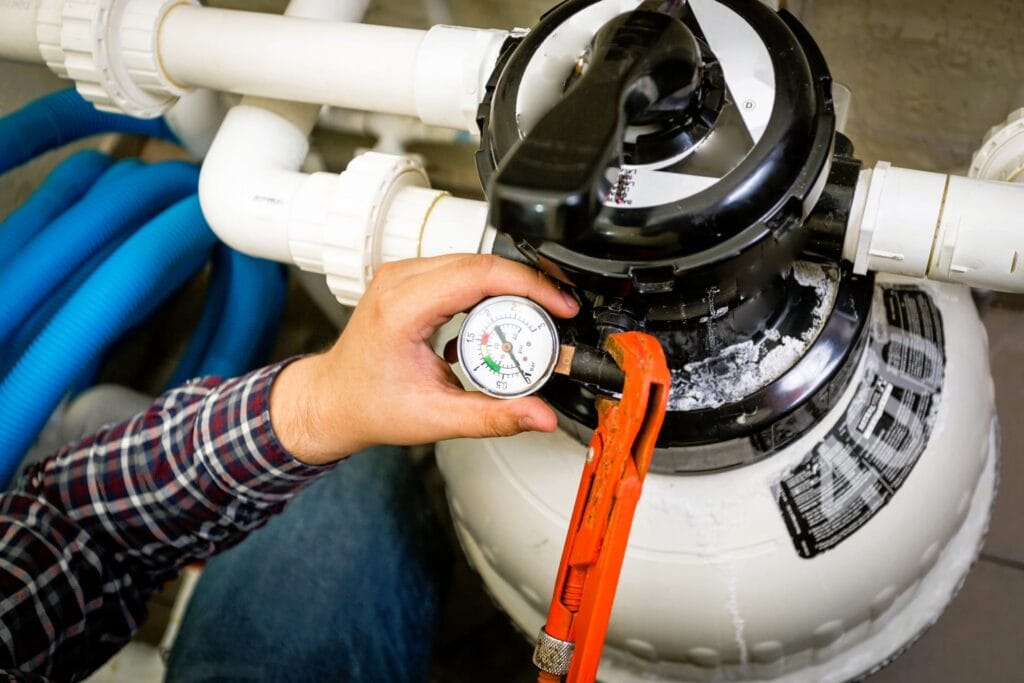
A pressure gauge becomes much more valuable once the homeowner knows the pool’s normal reading immediately after filter cleaning. A gradual increase generally indicates growing resistance as the filter captures material, while an unusual pressure drop may point toward another circulation issue involving the pump basket, skimmer, water level, suction side, or equipment. Jandy’s sand filter instructions call for backwashing at 10 to 12 PSI above clean pressure for the models addressed in its manual. Pool service records make unusual changes easier to recognize because technicians can compare today’s readings with several previous visits rather than evaluating one isolated number.
- Clean filter pressure establishes the most useful reference point.
- Rising pressure may indicate increasing filter resistance.
- Unexpectedly low pressure may point to a separate circulation issue.
- Manufacturer service thresholds vary between filter models.
- A sudden pressure change deserves investigation rather than guesswork.
Heavy Pool Use Effects
Swimming activity adds more to pool water than the debris people can see floating on the surface. Perspiration, sunscreen, cosmetics, body oils, hair products, and other contaminants eventually move toward the filtration system, where some can coat filter media and make ordinary rinsing less effective. Pentair’s cartridge guidance discusses filters exposed to perspiration, suntan lotions, and oils and notes that appropriate cleaning solutions may be needed to remove oily buildup. Pool service intervals may therefore need to become more frequent during parties, holidays, school breaks, or other periods when the swimming pool receives substantially more use.
- Body oils can accumulate within cartridge media.
- Sunscreen may require more thorough filter cleaning.
- Heavy swimmer loads can increase filtration demands.
- Clear-looking water does not always mean filter media is clean.
Weather and Filter Cleaning
Weather can change filter-cleaning needs quickly because wind, pollen, dust, leaves, insects, and storm runoff introduce additional material into the swimming pool. Pentair explains that filter pressure buildup varies with bathing loads, temperature, and environmental conditions, which helps explain why two pools equipped with similar filters may require completely different maintenance schedules. A windy week or heavy leaf drop can load a filter much faster than a calm period even when the previous cleaning occurred only recently. Pool service should respond to changing debris conditions rather than applying exactly the same cleaning interval throughout the year.
- Wind can push substantial debris toward the circulation system.
- Pollen and fine dust may increase filter loading without creating large visible debris.
- Seasonal changes can shorten or lengthen maintenance intervals.
- Regular skimmer basket cleaning reduces some material before it reaches the filter.
- Storms may justify an extra equipment inspection even when routine service is not yet due.
Dirty Filter Warning Signs
A dirty filter can reveal itself through rising pressure, weaker return flow, longer cleanup times, or filtration that no longer keeps pace with contaminants entering the water. Cloudiness deserves investigation but should not automatically be blamed on the filter because poor water chemistry, inadequate sanitizer, insufficient pump runtime, circulation problems, or an algae outbreak can produce similar symptoms. The CDC recommends maintaining filtration and recirculation systems according to manufacturer recommendations, reinforcing the importance of matching service procedures to the equipment actually installed. Pool service technicians can evaluate water chemistry, circulation, pump performance, filter pressure, and debris conditions together before deciding that cleaning alone will solve the problem.
- Weak return flow can indicate increasing restriction.
- Gauge changes provide useful diagnostic information.
- Cloudy water may have causes unrelated to filter cleanliness.
- Several system conditions should be checked before replacing filter components.
Avoid Excessive Backwashing
More frequent cleaning does not automatically mean better filtration, particularly when maintaining a sand filter. Jandy lists backwashing too frequently among possible causes of water clarity problems in its sand filter troubleshooting information and directs users to allow pressure to increase before beginning the procedure. Unnecessary backwashing may also discharge a considerable amount of pool water to waste, depending on how the plumbing system is configured. A careful pool service plan relies on filter pressure, flow, operating conditions, and equipment instructions instead of treating backwashing as a mandatory weekly task.
- Backwashing should respond to filter conditions rather than habit.
- Sand filters should be maintained according to model-specific instructions.
- Unnecessary backwashing can waste treated pool water.
- Pressure thresholds reduce calendar-based guesswork.
- Premature maintenance can create work without improving filtration.
Pool Filter Deep Cleaning
Routine rinsing can remove loose dirt, but filter media may eventually collect oils, scale, algae residue, minerals, or other deposits that require more thorough treatment. Pentair’s cartridge instructions state that mineral buildup may require acid soaking and warn that oils should be removed first because improper treatment can permanently restrict water flow through the cartridge. A deeper service also creates an opportunity to inspect manifolds, O-rings, clamps, grids, cartridges, drain plugs, and other accessible filter components for wear. Pool service becomes particularly useful when maintenance requires chemicals, disassembly, or procedures the homeowner has never performed before.
- Oil buildup may require more than rinsing with a garden hose.
- Mineral deposits can require specialized treatment.
- Internal components can be inspected while the filter is open.
- Damaged seals or filter media can be identified before they cause larger problems.
- Manufacturer instructions should determine which cleaning products are appropriate.
Filter Service Safety
Pool filters operate under pressure, making proper shutdown, air relief, and opening procedures essential parts of safe maintenance. Pentair states that it recommends filter maintenance be performed by a pool professional and provides equipment-specific warnings for servicing pressurized filtration systems. Homeowners who perform their own maintenance should read the manual for the exact make and model rather than assuming that every filter tank, clamp, valve, and air-relief assembly works the same way. Pool service can remove much of that uncertainty when the job requires opening a pressurized vessel or disassembling unfamiliar equipment.
- Filters must be fully depressurized before opening.
- Different filter designs require different service procedures.
- Model-specific manuals contain important safety instructions.
- Clamps, lids, valves, and seals deserve careful inspection.
- Unfamiliar pressurized equipment is a good reason to use professional pool service.
Professional Pool Service Schedule
A useful maintenance plan connects filter condition with pump operation, water chemistry, swimmer load, debris, and circulation instead of treating filtration as an isolated task. ENERGY STAR explains that slower filtration rates can improve filtration while reducing strain on filters, plumbing, and other equipment when variable-speed or multi-speed pumps are operated appropriately. Service records can document clean filter pressure, pump settings, chemistry, weather conditions, and cleaning dates, revealing how long it normally takes resistance to increase under different circumstances. Pool service then becomes a history-based maintenance process built around the actual swimming pool instead of a series of disconnected guesses.
- Pressure records reveal recurring maintenance patterns.
- Pump operation influences water movement through filtration equipment.
- Service history can reveal seasonal changes in cleaning frequency.
- Water chemistry and filtration should be evaluated as connected systems.
Pool Filter Care Strategy
The answer to filter-cleaning frequency is rarely every seven days, every month, or another universal interval because swimming pools operate under widely different conditions. Cartridge, sand, and DE filters require different maintenance methods, yet manufacturer guidance repeatedly points toward pressure increase above a clean starting reading, often paired with declining flow, as an important service signal. Weather, swimmers, lotions, pollen, leaves, pump settings, algae, filter age, and equipment condition can move that maintenance point forward or backward throughout the year. Consistent pool service helps homeowners clean equipment when it actually needs attention while avoiding unnecessary maintenance that consumes water, chemicals, or time without solving a performance problem.
- Filter type determines the correct maintenance procedure.
- Clean starting pressure should be documented after service.
- Flow changes can support what the pressure gauge is indicating.
- Cleaning frequency should adjust when operating conditions change.
- Manufacturer instructions should take priority over a generic maintenance calendar.

Pool Service Key Takeaways
Filter care becomes more effective when homeowners stop treating cleaning as a fixed calendar event and start watching how the equipment actually performs. Manufacturer guidance for several common filter systems points toward pressure rise and reduced flow as practical maintenance signals, while swimmer activity, oils, weather, debris, and water conditions help explain why those changes develop at different rates. A pool service can combine pressure readings with physical inspections, water testing, pump checks, and maintenance history to create a schedule based on the needs of one specific swimming pool. That approach can prevent filters from becoming excessively restricted while also avoiding premature cleaning that provides little benefit.
- Many filters require cleaning after a manufacturer-specified pressure increase above the clean baseline.
- Cartridge, sand, and DE filters use different maintenance procedures.
- Heavy swimmer loads can introduce oils, sunscreen, and other contaminants into filter media.
- Weather and seasonal debris can shorten the interval between service visits.
- Routine pressure records make maintenance decisions easier over time.
- Equipment-specific instructions are more useful than one universal cleaning schedule.
Pool Filter Cleaning FAQs
How Often Should Filters Be Cleaned? No single cleaning interval applies to every swimming pool filter because debris load, swimmer activity, weather, pump operation, filter size, and equipment type all affect how quickly resistance develops. Many manufacturers instruct owners to compare current pressure with the clean starting pressure rather than relying solely on elapsed time, making a documented baseline especially useful during regular pool service.
How Can Owners Spot a Dirty Filter? Rising filter pressure and declining return flow are two common signs that collected material may be restricting circulation. Cloudy water can occur as well, but chemistry, sanitizer levels, algae, pump runtime, and circulation problems can produce similar symptoms, so homeowners should consider several indicators before assuming the filter is responsible.
Can Filters Be Overcleaned? Some filtration systems can receive maintenance more frequently than operating conditions require. Jandy’s sand filter instructions specifically warn against backwashing too often and recommend allowing pressure to rise before performing the procedure, which is why pool service based on actual readings can prevent unnecessary work and water loss.
Does Pool Service Clean Filters? Many pool service plans include filter inspections and some form of routine filter maintenance, but the exact work varies between companies and service packages. Cartridge removal, DE recharging, sand backwashing, internal inspections, and deep chemical cleaning may occur at different intervals or be priced separately, so homeowners should review the written service scope before assuming every procedure is included.
What Happens Without Filter Cleaning? A filter that continually traps debris develops increasing resistance to water moving through the circulation system. ENERGY STAR notes that deliberately slower filtration through properly adjusted pump operation can be beneficial, but a clogged filter is different because accumulated contaminants restrict flow rather than controlling pump speed efficiently. Ignoring manufacturer cleaning signals can eventually contribute to weak circulation, reduced filtration performance, and equipment conditions that deserve prompt attention.

Piper specializes in crafting compelling narratives for local businesses throughout the unique landscape of Louisiana and beyond.