Ice on an air conditioner usually signals an airflow, refrigerant, or heat-transfer problem rather than a system making too much cold air. The evaporator coil needs a steady stream of indoor air to absorb heat, and that process can break down when a filter becomes clogged, a blower loses power, or refrigerant pressure drops. An AC repair technician from Tropical Air Kare offers this practical advice: “When an air conditioner freezes, shutting it down and finding the underlying cause can help prevent a small airflow or refrigerant problem from putting more strain on the system.” Identifying the cause early can help limit equipment stress and keep AC repair from becoming more extensive.
- Ice usually points to another system fault.
- Airflow has a direct effect on evaporator temperature.
- Refrigerant pressure influences coil conditions.
- Running a frozen system can increase equipment strain.
What Causes AC Freezing
Restricted airflow and low refrigerant are two established causes of evaporator coil freezing, according to Carrier air conditioner troubleshooting guidance. One common service example starts when a homeowner reports warmer rooms and weak airflow, then an inspection finds frost on the copper refrigerant line and a filter packed with dust. Replacing the filter may restore circulation once the ice melts, but a system that freezes again often needs AC repair to check refrigerant conditions, blower performance, and coil temperature. Ice should be treated as evidence of another problem, not the problem itself.
- Check simple airflow restrictions first.
- Look for frost on refrigerant tubing.
- Pay attention to weak air coming from several vents.
- Schedule diagnosis when freezing returns.
Low AC Airflow Problems
Indoor air must move across the evaporator coil so refrigerant can absorb heat from the house. ENERGY STAR reports that airflow problems can reduce HVAC system performance by as much as 15 percent, making circulation problems more than a comfort issue. Restricted airflow can allow coil temperature to fall far enough for condensation to freeze, and once ice develops it can block even more air from passing through. AC repair professionals measure static pressure or airflow when the restriction cannot be found through a filter or vent inspection.
- Duct restrictions can reduce circulation.
- Blower faults can limit air movement.
- Ice can create another layer of restriction.
- Several weak vents can point toward a systemwide airflow issue.
Dirty AC Air Filter
A heavily loaded air filter can starve the evaporator coil of the warm return air it needs for heat exchange. The U.S. Department of Energy states that cleaning or replacing air-conditioner filters can lower cooling energy consumption by 5 to 15 percent, showing how much filter condition can affect operation. Homeowners should inspect the filter regularly during heavy cooling months and follow the equipment or filter manufacturer’s replacement guidance rather than relying on one schedule for every house. AC repair service may still be necessary when a clean filter does not prevent the coil from icing again.
- Inspect the filter for dust and matted debris.
- Follow manufacturer replacement recommendations.
- Check filters more often during high-use periods.
- Do not assume a new filter fixes every airflow problem.
Frozen Evaporator Coil
The evaporator coil contains refrigerant that absorbs heat from indoor air during the cooling cycle. Carrier explains that the evaporator coil absorbs heat from household air, allowing cooled air to return through the duct system. Condensation normally forms on the coil during cooling, but that moisture can become ice when coil temperature drops below freezing, then the growing layer of frost further reduces heat transfer and airflow. Professional AC repair should determine why the coil became cold enough to freeze instead of focusing only on removing the ice.
- Condensation is normal during cooling.
- Frozen moisture can cover coil surfaces.
- Thick ice interferes with heat transfer.
- The original cause still needs diagnosis after thawing.
Dirty Evaporator Coils
Dust and residue on evaporator fins can interfere with heat transfer between indoor air and refrigerant. ENERGY STAR states that dirty air-conditioning coils reduce cooling ability and can cause equipment to run longer than necessary. Coil contamination may exist alongside a clogged filter or airflow restriction, and the problem can become harder to see once frost covers the surface. AC repair testing can help distinguish coil buildup from a refrigerant fault, blower issue, or duct restriction.
- Dirty fins can limit heat exchange.
- Long cooling cycles can signal reduced performance.
- Coil fins should be cleaned without bending or damaging them.
- Recurring ice deserves more than surface cleaning.
Low AC Refrigerant
Low refrigerant can lower pressure inside the evaporator, allowing coil temperature to fall below the freezing point of water. Carrier identifies low refrigerant as a cause of frozen AC coils and explains that reduced pressure can lead to ice buildup. ENERGY STAR also recommends checking refrigerant level during cooling-system service because improper charge can affect system operation. A suspected refrigerant leak belongs in AC repair because accurate diagnosis requires pressure readings, temperature measurements, and trained handling rather than simply adding refrigerant.
- Low charge changes evaporator pressure.
- Leaks can cause repeated freezing.
- Refrigerant should not be treated as a routine top-off item.
- Proper testing can separate low charge from airflow trouble.
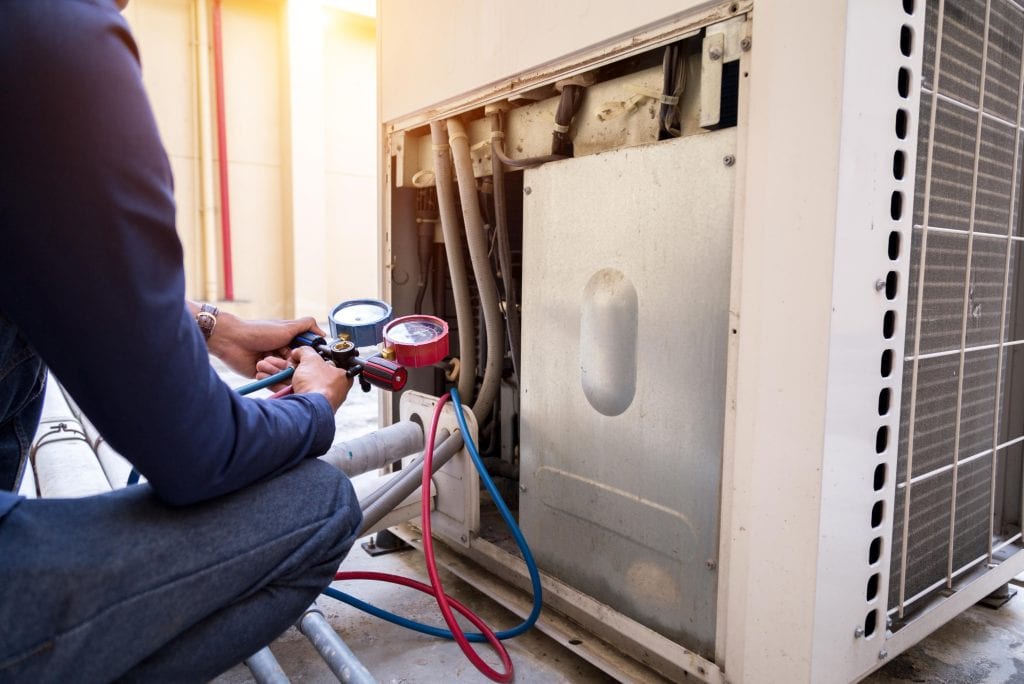
Blower Motor Problems
The blower moves indoor air through the return system, across the evaporator coil, and back into the house. A failing motor, capacitor, relay, control board, or electrical connection can reduce airflow enough for the coil to become unusually cold, and Carrier lists fan malfunction among causes of frozen coils. Homeowners may notice weak airflow at several registers, unusual blower sounds, or a fan that starts and stops unpredictably. Electrical testing connected with blower failure should be handled during AC repair because several components can create similar symptoms.
- Compare airflow at several supply vents.
- Listen for changes in blower sound.
- Watch for intermittent fan operation.
- Report burning smells or repeated electrical trips promptly.
Blocked AC Return Airflow
Return grilles carry room air back toward the indoor cooling equipment, so blocked returns can reduce the amount of heat reaching the evaporator coil. Furniture, dust buildup, collapsed duct sections, closed doors, or poor duct design may restrict that pathway and create symptoms that resemble other AC problems. Closing numerous supply registers can also disturb system pressure rather than directing cooling neatly into other rooms. Persistent airflow loss may require AC repair testing to determine whether the restriction is at a grille, inside the duct system, or near the blower.
- Keep return grilles clear of furniture and boxes.
- Check supply registers for accidental blockage.
- Inspect accessible duct sections for damage.
- Avoid closing large numbers of room vents.
Thermostat Fan Problems
The thermostat and system controls coordinate when the cooling cycle and blower should start, continue, and stop. ENERGY STAR recommends checking thermostat settings and HVAC operating controls during maintenance so equipment operates as intended. A bad thermostat signal, relay, wiring problem, or control-board failure can allow refrigeration to continue without enough blower airflow crossing the coil. That type of problem calls for AC repair diagnosis because replacing the thermostat alone will not correct every control failure.
- Check whether the blower starts when cooling begins.
- Verify thermostat settings before assuming a mechanical failure.
- Watch for irregular fan cycling.
- Leave electrical troubleshooting to trained service personnel.
AC Freezing Warning Signs
A frozen coil often produces warning signs before a homeowner discovers a sheet of ice inside the air handler. Carrier lists poor cooling, ice on copper lines, and excess water near indoor equipment among symptoms associated with coil freezing. Reduced airflow, extended cooling cycles, higher indoor temperatures, or water appearing after the ice melts can provide other clues. AC repair becomes more urgent when the same symptoms return soon after the equipment has completely thawed.
- Look for frost on exposed copper tubing.
- Notice whether vent airflow becomes weaker.
- Watch for water around the indoor unit after thawing.
- Track how often cooling performance drops.
What To Do First
A homeowner who finds ice should turn off the cooling cycle rather than forcing the system to continue operating. Carrier advises homeowners to shut down a system with a frozen evaporator coil because continued use can contribute to equipment damage. The filter and visible vents can be checked while the ice melts naturally, and towels or a suitable container can help manage water near the indoor equipment if needed. Refrigerant tubing, electrical components, and the coil itself should not become a do-it-yourself repair project.
- Turn the cooling function off.
- Allow the ice to melt on its own.
- Inspect the air filter for heavy buildup.
- Keep thawing water away from electrical components.
- Never chip or scrape ice from the evaporator coil.
When AC Repair Is Needed
A badly clogged filter may offer an obvious explanation, but refrigerant leaks, blower failures, control problems, and repeat freeze-ups require a deeper diagnosis. A Department of Energy air-conditioner diagnostic guide explains that evaporator airflow needs accurate measurement and that refrigerant evaluation can involve readings such as superheat and subcooling. Those measurements help technicians separate low airflow from an improper refrigerant charge instead of guessing from ice alone. AC repair should identify the condition that caused freezing rather than stopping once the visible frost disappears.
- Repeat freezing needs systematic diagnosis.
- Refrigerant readings help identify charge problems.
- Airflow measurements can uncover hidden restrictions.
- Electrical faults require proper test equipment.
Preventing AC Freeze Ups
Preventive care starts with keeping filters, coils, supply vents, return grilles, and airflow pathways in serviceable condition. ENERGY STAR advises homeowners to inspect, clean, or change central HVAC filters each month and replace them when dirty or according to manufacturer guidance. Seasonal service can also uncover refrigerant concerns, blower wear, drainage trouble, or control issues before those faults contribute to icing. Consistent attention cannot prevent every breakdown, but it can reduce avoidable AC repair and help homeowners recognize changes earlier.
- Inspect filters throughout cooling season.
- Keep supply and return vents unobstructed.
- Have coil condition checked during service.
- Respond when airflow changes unexpectedly.
- Keep notes about previous freeze-up causes and repairs.
Frozen AC System Planning
A freeze-up becomes easier to understand when ice is viewed as the result of another condition instead of a stand-alone failure. Airflow restriction, refrigerant loss, dirty coils, blower trouble, and control faults can produce similar symptoms, which is why repeated icing should be measured and tested instead of diagnosed by appearance alone. Homeowners can check accessible filters and vents, while refrigerant, electrical, and mechanical problems belong in AC repair. A practical long-term approach combines routine maintenance, observation of airflow changes, and prompt diagnosis whenever the same freezing problem returns.
- Treat ice as a warning rather than a diagnosis.
- Separate visible symptoms from the underlying fault.
- Document previous repairs when freezing repeats.
- Use testing when simple airflow checks do not explain the problem.

AC Repair Key Takeaways
Frozen air conditioners usually point toward trouble involving airflow, refrigerant pressure, heat transfer, or mechanical operation. DOE guidance shows that filter care can reduce cooling energy use by 5 to 15 percent, while ENERGY STAR reports that airflow problems can reduce HVAC performance by as much as 15 percent. Homeowners can safely inspect filters and visible airflow obstructions, but recurring ice, suspected refrigerant loss, blower failure, or electrical trouble belongs in AC repair. Continuing to run equipment while the evaporator is covered in ice can increase stress on the system and delay identification of the real fault.
- Restricted airflow can lead to coil freezing.
- Low refrigerant can push evaporator temperature too low.
- Dirty filters deserve regular inspection.
- Turn cooling off when ice appears.
- Repeated freezing needs professional diagnosis.
Frozen AC FAQs
Why Does My AC Freeze Up?
An air conditioner can freeze when airflow across the evaporator becomes too low or refrigerant conditions cause coil temperature to fall below freezing. Dirty filters, blocked airflow, coil contamination, blower trouble, and low refrigerant are recognized causes. Ice that comes back after the system thaws usually means AC repair is needed to identify the underlying fault.
Can A Dirty Filter Freeze AC?
A clogged filter can restrict the air moving across the evaporator coil and contribute to freezing. DOE reports that cleaning or replacing filters can also reduce air-conditioner energy consumption by 5 to 15 percent. A clean filter will not correct a refrigerant leak, failed blower, duct restriction, or control problem.
Should I Run Frozen AC?
A system showing ice should not continue cooling while the cause remains unknown. Carrier recommends shutting down cooling when the evaporator coil is frozen to reduce the chance of equipment damage. The coil should be allowed to thaw fully before the system is reconsidered for operation.
How Long Does AC Thaw?
Thawing time depends on ice thickness, indoor temperature, airflow, and equipment design. Carrier reports that frozen coils may take about one to four hours to thaw in some situations. A heavily iced coil may need longer, so restarting cooling before the ice has cleared can cause the problem to return quickly.
Does Frozen AC Need Repair?
A clogged filter caught early may explain a one-time freeze-up once the system thaws and airflow is restored. Ice that returns, weak blower operation, suspected refrigerant loss, electrical trouble, or unexplained airflow changes should lead to AC repair. Proper testing can identify why the coil froze rather than treating visible ice as the entire problem.

Piper specializes in crafting compelling narratives for local businesses throughout the unique landscape of Louisiana and beyond.